
It is 35 degrees in Geneva today, a temperature this city rarely sees in June. Yesterday, the Geneva Science Diplomacy Week opened at the World Health Organization with a debate on mirror biology, a technology whose risks are still theoretical. Today, the cohort did not need a thought experiment for risk arriving ahead of governance. They only needed to step outside of their comfort zone. Every UN Security Council resolution adopted since 1948. A future in which a ransomware attack hits AI-powered brain implants. And a room of diplomats, scientists and business leaders asked to step into the future of science, rehearse strategies and governance frameworks, and uncover the patterns behind the politics.
The Geneva Science Diplomacy Week 2026 turned today to computational diplomacy, an emerging field that uses data, AI and network analysis to deepen understanding of international relations dynamics, and to GESDA’s own tools for turning anticipation into something leaders can act on, from the Science Breakthrough Radar to an immersive simulation into the future of neurotechnology.
Fifty years of the Security Council, read by machine
The morning opened with a hands-on session led by Professors Didier Wernli, Roland Bouffanais and Stéphan Davidshofer, all of them faculty at University of Geneva Global Studies Institute and its Laboratory for Science in Diplomacy (SiDLab). Their starting point was one of multilateralism’s richest archives: every resolution the UN Security Council has adopted since 1948.
“Diplomacy generates an enormous amount of text, and most of it is never read again once the vote is taken,” said Wernli. “Computational methods let us go back through decades of resolutions and ask new questions of them, what language clusters together, what shifts over time, what patterns repeat.“
Working in small groups, participants traced how language in UN Security Council resolutions has shifted across decades and debated what the data could – and could not- tell them about why some resolutions pass unanimously while others stall.
Davidshofer pushed the discussion a step further, from explanation to anticipation. “Understanding what has already happened is the easier half of this work,” he said. “The more useful question is whether these methods can help us see a deadlock, or a breakthrough, coming before it happens.“
Meet the Leader: Anna Koivuniemi, Google DeepMind
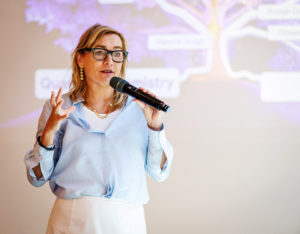
Over lunch, the cohort met Anna Koivuniemi, Head of the Impact Accelerator at Google DeepMind. AlphaFold — DeepMind’s protein structure prediction tool, which compresses work that once took months or years into minutes was recognized by the Nobel Prize in 2024 — was the entry point into a more candid conversation: how a frontier AI lab decides which capabilities to build, which to release, and which to hold back. Picking up from yesterday’s panel at WHO, Koivuniemi described the deliberation behind AlphaFold’s open release — fifty scientists consulted on what should be shared and what should not. “In our decisions about restricting more dangerous capabilities, like protein-design tools, we are convinced the benefits outweighed the risks,“ she said. Where to draw the limits of open science when results could fall into the wrong hands is the same unresolved question that ran through the mirror biology debate.
The conversation that followed kept circling back to one tension: how a leading AI lab squares the pace of industry deployment with the slower rhythms of multilateral governance. “How do we adapt to the pace of change of these technologies?” reflected Koivuniemi.
A ransomware attack on the brain, twenty years from now
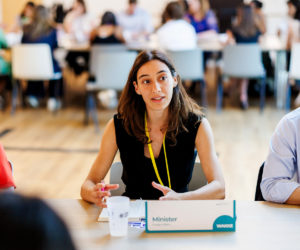
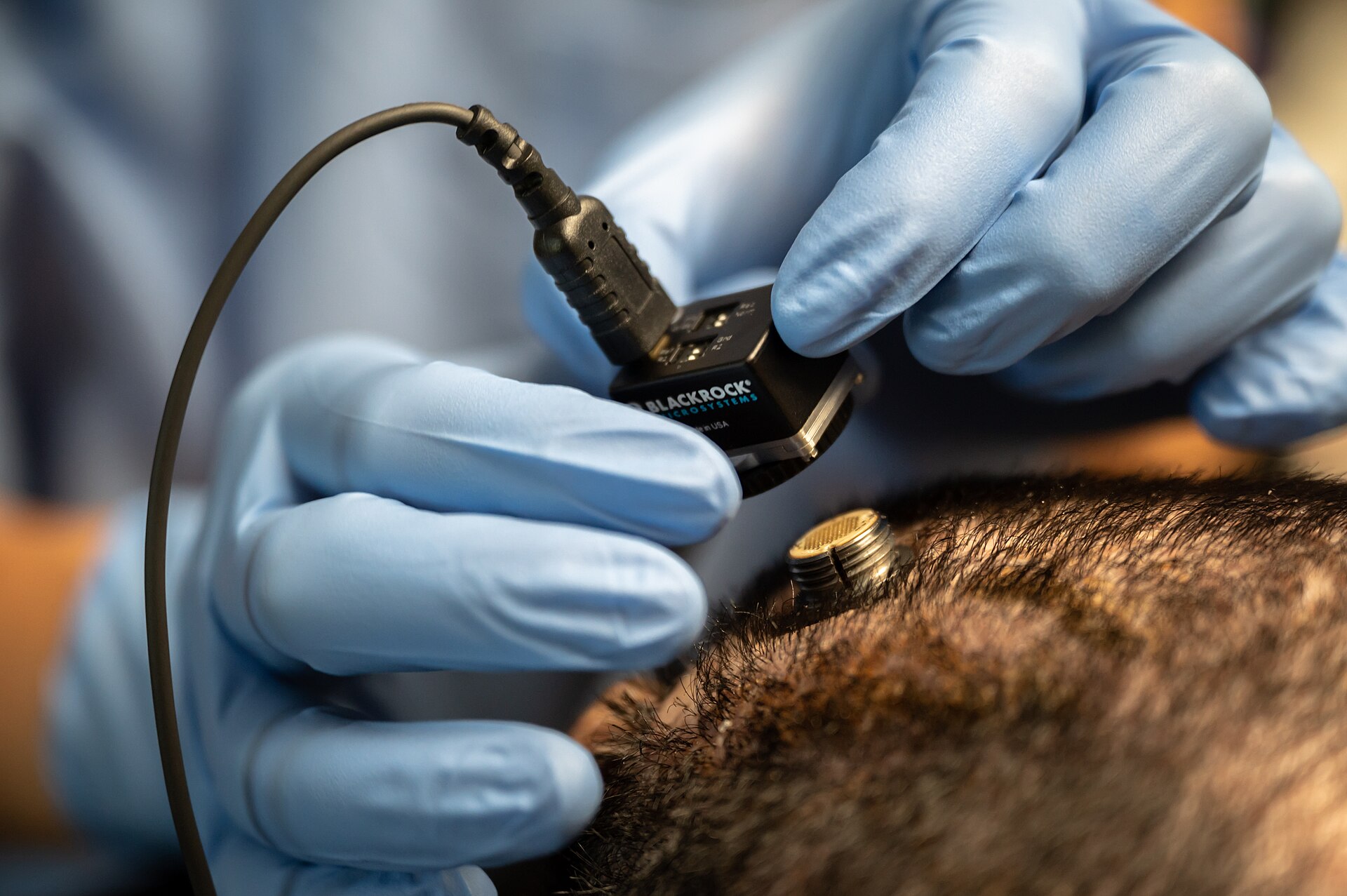
In the heat of the afternoon, the cohort was projected forward to 2045 — into a world in which neurotechnologies have become deeply woven into daily life, enhancing cognition, therapy, productivity and quality of life, while raising hard questions of privacy, access and human rights. The scenario’s flashpoint: a major ransomware attack on brain implants, forcing the group into the kind of crisis governance that today’s institutions have barely begun to imagine.
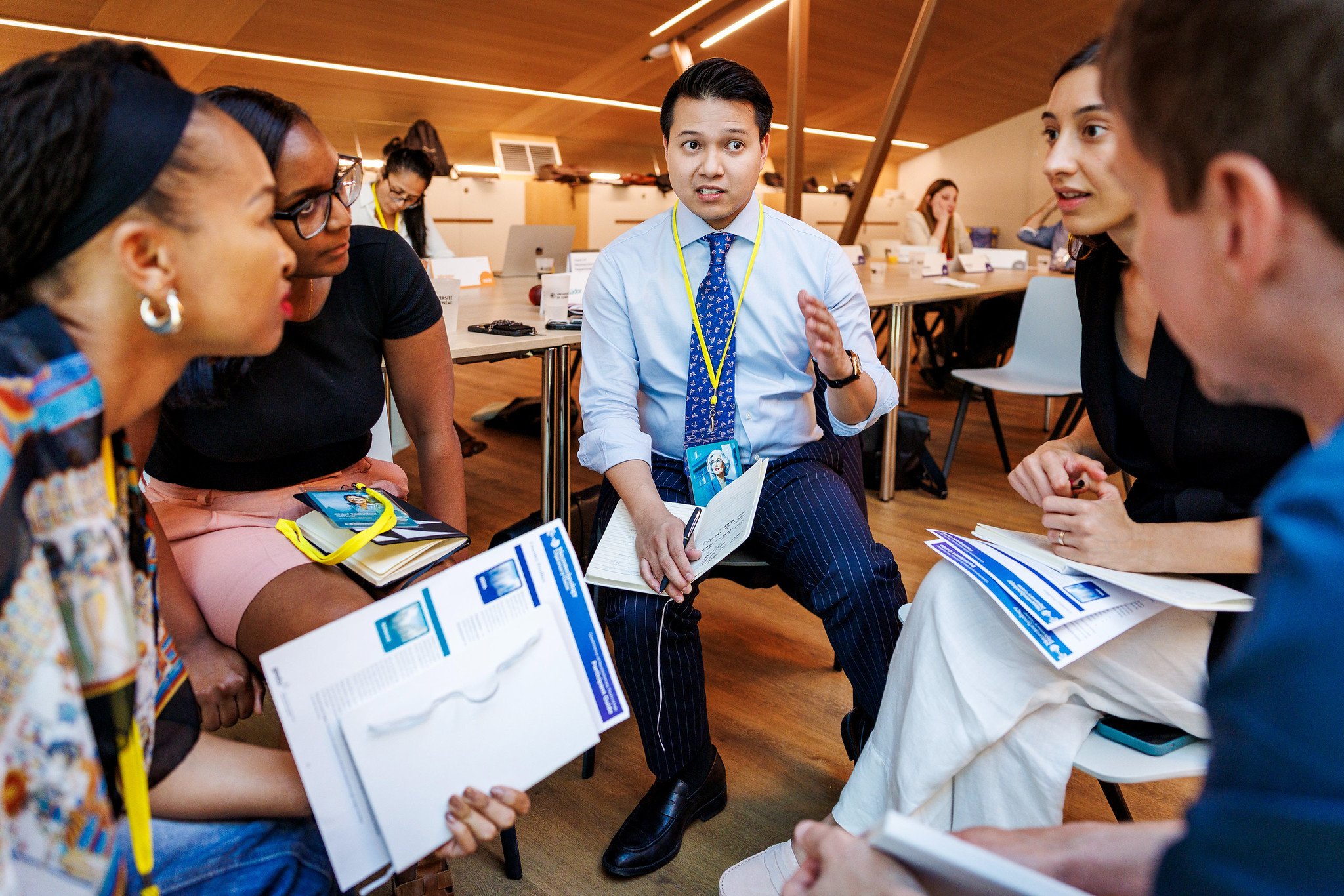
This was the GESDA Neurotechnology Diplomacy Game, an experiential simulation built to take participants out of their own roles and into someone else’s mandate. Playing ministers, ambassadors, civil society advocates, academics and private-sector executives — almost always far from their day jobs — the cohort spent the afternoon negotiating trade-offs that had felt abstract just hours earlier: who gets access to neurotechnology research and brain data, and who answers for it when it is compromised.
The pedagogy of role reversal allowed participants to step into each other’s shoes.

“It is so complicated to manage your delegation when you understand that already within your own country, you have different opinions,” reflected Marta Delgà Fernández of Spain, playing the Foreign Minister of the fictional country of Bria.
“Being in the role of civil society was a stretch for me — I have never experienced such a perspective,” said Kgomotso Austin of South Africa, who played a tech advocacy leader defending human rights protections in the age of neurotechnology. “Because there is nothing tangible that you seem to be defending, the strategy becomes being very inflammable and accusatory. That wakes people up — and you get a reaction.”
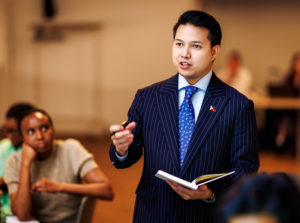
Brian Llamanzares, member of congress in the Philippines, offered a reminder: “No country is too small for multilateral negotiations. Every country counts.”
The simulation’s deeper purpose was the experience of having to argue a position that wasn’t your own, in a crisis that demanded action before consensus under considerable uncertainty about the opportunities and risks of an emerging technology, with stakes that the participants had only minutes earlier discussed in the abstract. Watching civil society representatives sharpen their accusations to be heard, foreign ministers manage internal dissent within their own delegations, and small-state representatives discover their leverage — these are the muscles that anticipatory science diplomacy is meant to build.
The thing from the future
The day closed at Impact Hub Geneva with The Thing from the Future, an award-winning imagination game that challenges players to collaboratively and competitively sketch out creative futures for science diplomacy in the age of AI. Maximilian Rau, Head of Innovation at foraus, guided the cohort through scenarios spanning unsettling, chaotic possibilities to hopeful strategies for future collaboration.
“Given today’s strained geopolitics, moments like this matter — carving out space for hope, not despite the chaos but because of it. Playing the game gave participants a chance to think differently, to imagine rather than just react, and that spark of optimism is exactly what carries a cohort through a demanding week,” said Rau.
From fifty years of UN Security Council resolutions to a simulated crisis two decades away, the day left the cohort with one resonant takeaway: the future we anticipate is ours to shape.
More from Science Diplomacy Week tomorrow.