-
Scientific advances are overturning the legal categories on life inherited from Roman law.
-
The Charter on the Law of the Living could help unify a fragmented body of law and protect animals, nature and hybrid entities.
-
The obsolescence of our legal categories underscores the need for proactive, anticipatory science diplomacy.
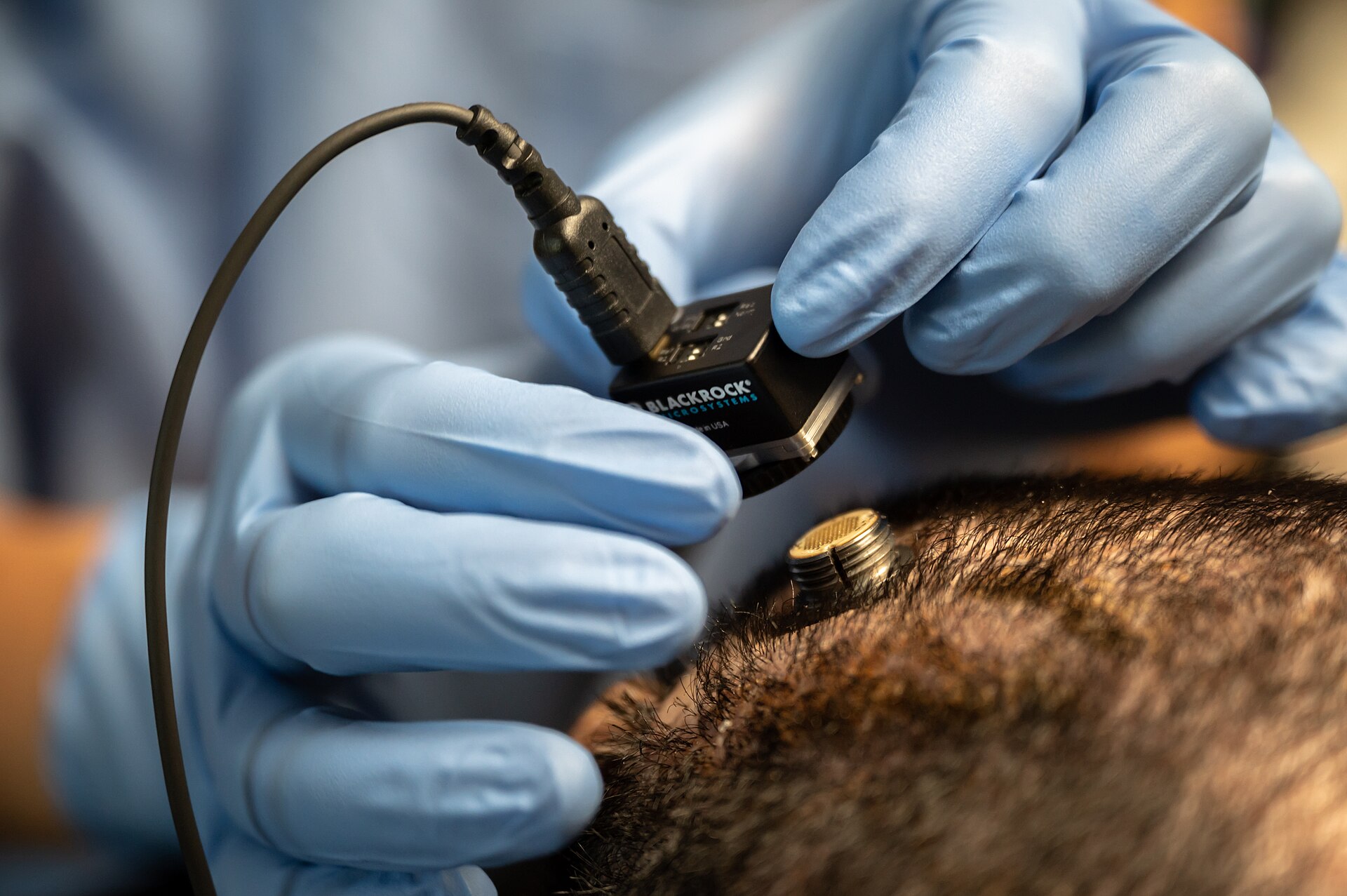
On the computer screen, scientists watch a game of Pong. Two vertical bars volley a pixelated square back and forth. No one in the lab is at the controls. To find the players, you need to peer inside a transparent dish containing a cluster of human and mouse neurons wired up to microelectrodes. In under five minutes, using a system of rewards and penalties, the neurons learned to keep the ball in play, and even outperformed a conventional artificial intelligence.
An Australian team published this experiment in 2021 in the journal Neuron. Known as “DishBrain”, it was the first experiment to demonstrate the learning capacity of such a device. But what, exactly, are we talking about? A machine? A human being? An animal? Do researchers have the right to manipulate these neurons, and should these cells be entitled to some form of legal protection?
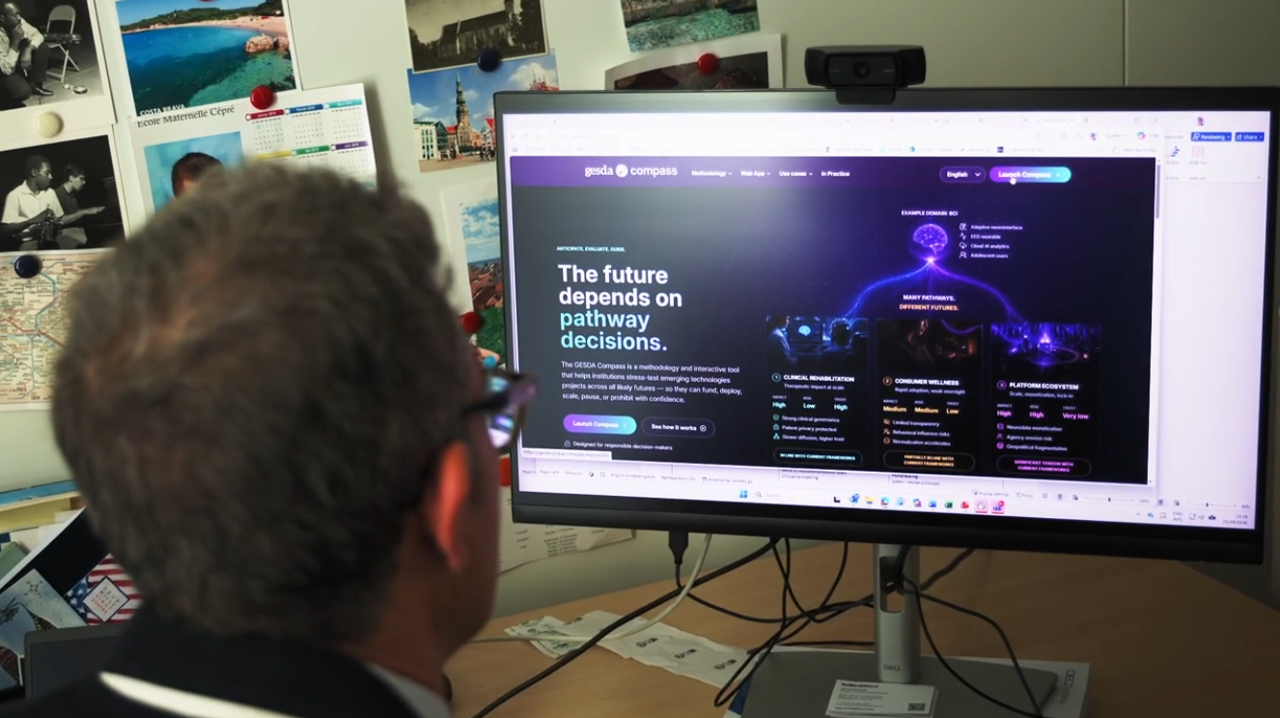
Confronted with advances of this kind, GESDA has already called, in its Radar, for a revision or adaptation of the “law of living beings” – a body of law whose gaps, if left unfilled, risk creating a legal vacuum across a wide range of domains.
The law of living beings is a young branch of jurisprudence. For centuries, the Western legal tradition treated everything non-human as a commodity devoid of inner life. The 20th century upended that assumption, as discoveries in ethology, neuroscience and genetics came thick and fast.
The kinship between great apes and humans was revealed as much by the complexity of their social lives as by genetics: the first sequencing of the chimpanzee genome, published in 2005 in Nature, showed a 96% to 99% genetic overlap with our own. More recent research into the brains and nervous systems of birds, octopuses and lobsters has likewise transformed the way we think about these creatures, and prompted changes in the law.
Who deserves protection?
The definition and legal protection of living beings varies from country to country, shaped by cultural particularities and economic priorities. One principle does appear to command broad agreement, however, according to Simon Brown, associate professor of philosophy and specialist in the law of living beings at Ashoka University in India: “The concept of sentience combined with that of conscience helps to clarify legal uncertainties. Consciousness means passing through states – whether visual experiences, smells or pain – that feel like something. Sentience requires ‘valence’: conscious states experienced as pleasant or unpleasant, such as emotions, pain or satisfaction.” Under this definition, a mammal can be recognised as deserving legal protection because it is both conscious and sentient. A plant or bacterium, by contrast, meets neither criterion.
Building on these ideas, the Treaty of Lisbon, ratified in 2009 by the European Union, marked a turning point. It formally recognised animals as sentient beings and obliged member states to take their welfare into account when formulating EU policy in areas such as fisheries, transport and research.
A scientific consensus on animal consciousness
Three years later, the scientific community set out its own points of consensus. On 7 July 2012, the Cambridge Declaration on Consciousness was signed. The document states that the neural structures generating consciousness in humans are present in many other species too, such as mammals and birds, and even in certain invertebrates such as octopuses. In the latter case, the absence of a neocortex does not appear to prevent the experience of affective states, a form of sentience.
More recently, on 19 April 2024, a group of scientists signed the New York Declaration on Animal Consciousness, extending the definition of sentient and conscious living beings to include reptiles, amphibians, fish and numerous invertebrates – cephalopod molluscs, decapod crustaceans and insects among them.
In France, the Cambridge Declaration fed extensively into the debates that led to the reform of the Civil Code in 2015, which recognised animals as “sentient living beings”. In Colombia and Argentina, the document was used to secure the release from captivity of a bear and a female chimpanzee. Lawyers successfully argued for their legal personhood on the basis of the Declaration.
A comparable attempt failed in New York. Happy, an Asian elephant, was the first of her species to recognise herself in a mirror – scientific evidence of self-awareness by Cambridge’s own criteria. Despite a prolonged legal battle, a New York State appeals court rejected in 2022 the bid to transfer her from the zoo to a larger sanctuary. For the judges, the right to legal protection and the status of “person” apply only to human beings.
These cases illustrate the many ways in which the concept of sentience is interpreted in law, and how difficult it is to harmonise the law of living beings. Economic stakes in the food industry and pharmaceutical research also enter the equation: if a species acquires the status of a legal person, its transport, consumption and laboratory use will all require tighter regulation.
For example, in 2017, Italy’s supreme court banned the common restaurant practice of keeping live lobsters bound on ice, ruling that it inflicted “unjustified suffering”, a ruling now backed by heavy fines. Switzerland had already led the way the previous year, banning the boiling of lobsters alive on the grounds of their sensitivity to pain.
A landmark scientific review commissioned from the London School of Economics by the British government, published in 2021, confirmed – as far as such things can be confirmed – that cephalopods such as octopuses and squid, and decapods such as lobsters and crabs, are sentient. The UK’s Animal Welfare (Sentience) Act 2022 was extended accordingly, granting these species legal protection against practices deemed cruel, including boiling alive.
A Roman legacy challenged by 21st-century science
Even where a consensus is emerging on animal welfare, the legal challenges remain formidable at the international level, says Audrey Lebret, professor of law at the University of Lausanne and an expert in biolaw. According to Lebret, “the legal approach to living beings is fragmented. Internationally, the sources of what we call biolaw include Council of Europe law, as well as more general human rights treaties – whether of universal or regional scope.” She also flags the existence of numerous soft law instruments on the law of living beings, which courts draw on in very different ways depending on the region of the world.
The obstacles to harmonising the protection of living beings are also rooted in the structure and history of law itself, says Bartha Knoppers, professor emerita of law at McGill University: “Law is historically built on dualisms: you are either alive or dead, either a person or a thing.” Lawyers know this binary principle as the summa divisio, inherited from Roman law. “The rapid advances of the biosciences – genetics, neuroscience and cellular research – are now blurring these definitions.”
While law struggles to harmonise the status of known sentient species, science advances at its own pace, indifferent to legislative borders. In this context, anticipation could serve as a governance tool.
Scientific progress is no longer merely blurring the boundaries of life; it now demands entirely new international protocols for hybrid entities. Take organoids: simplified, miniaturised versions of living organs produced in the laboratory, like the nervous system of the DishBrain project. Where should the limits on organoid production lie, to prevent the entities created from developing consciousness? The question remains unresolved, and the protocols are nowhere in sight.
The DishBrain researchers actually used the term “sentience” to describe the neurons’ ability to perceive sensory information and respond to it purposefully. If their system were one day recognised as sentient, what rights, if any, would it be entitled to?
Joshua Jowitt, lecturer in law at Newcastle University, argues that legislation on the laboratory use of neural organoids should be enacted now, precisely to avoid repeating what happened to Happy the elephant. In a 2023 article in the Cambridge Quarterly of Healthcare Ethics, he argues for a precautionary approach in the face of scientific uncertainty. Organoids, he contends, should be treated as sentient as soon as they display credible brain structures capable of supporting some form of consciousness – in other words, treated like laboratory animals, subject to the three Rs: reduce numbers, refine procedures, replace use wherever possible.
Living machines in sight
Experts convened by GESDA also flag “cellular computing” as a technological advance requiring diplomatic and legal anticipation. The technology involves using living cells as tiny information-processing computers. GESDA’s Radar projects that, within ten years, cellular computing could harness a cell’s own metabolism to perform calculations, with direct biomedical applications – enabling cells to diagnose and treat disease in situ. Within 25 years, these cellular computers could be deployed to decontaminate, monitor or reprogramme entire ecosystems, making them more resilient to climate change. If a machine is partly “alive”, who bears responsibility when a technical fault occurs inside a human body or an ecosystem (see box)? And should such a machine be considered sentient?
GESDA’s Radar on genetically modified organisms and AI-based tools further notes that, within a decade, the use of chimeras – animal embryos incorporating human cells – could become standard practice in gene therapy. Within 25 years, universal cells equipped with protective genetic circuits could be implanted in healthy individuals to prevent disease before it even manifests. Without anticipating these developments, how can we safeguard human genome modification and the use of animal and human cells that such technologies entail?
Extending the spirit of the law into space
For legal scholar Knoppers, adapting the legal framework should mean extending the spirit of existing laws to new technologies – not constraining science. “Technologies change their names, they evolve; laws can quickly become outdated if they’re too specific. Overly restrictive legislation could hamper new scientific advances,” she warns. In a 2019 article in Science co-authored with Henry T. Greely, professor of law at Stanford University, she proposes deploying the concepts of “substantially human” and membership of “the human family”. These notions, she argues, could help evaluate the blurry new biological realities emerging from laboratories and orient debates about the rights they might warrant.
The problem does not stop at Earth’s borders. If we cannot formulate a coherent legal framework for living beings on our own planet, how will we manage in space? Every future scenario deserves consideration – up to and including the discovery of extraterrestrial life, past or present. GESDA’s expert panels consider this scenario realistic within 25 years, given the return of Martian samples and the exploration of the icy moons of Saturn and Jupiter. Anticipatory diplomacy could head off a legal vacuum. If an active form of life is discovered, for instance, a fundamental question would arise: is it an exploitable “resource” under the Outer Space Treaty of 1967, or a subject of law deserving protection as “universal heritage”?
The challenge for legal experts and diplomats is therefore no longer simply to protect what we know, but to anticipate the unknown. By legislating today on the blurry biological realities being created in laboratories, the international community would lay the groundwork for a future ethical code capable of embracing life in all its forms and origins.
Rivers with RightsLike the non-human animal world, the plant kingdom and even ecosystems are undergoing their own legal revolution. Indigenous communities are at the forefront. In 2017, New Zealand’s Māori people secured legal personhood for the Whanganui River, which their culture regards as a living ancestor – making it the first river in the world to receive such status. In practical terms, the river now holds the same rights and duties as a legal entity such as a company: it can be represented in court, own property and be protected against degradation. India followed suit that same year, granting comparable rights to the Ganges and the Yamuna. Tracking these developments, legal scholars have sought to reconcile animal-rights and environmental approaches. In the wake of the 2012 Cambridge Declaration on Consciousness, the Declaration on the Legal Personality of Animals – known as the Toulon Declaration – was proclaimed on 29 March 2019. This was extended in 2021 into the Charter on the Law of the Living, linked to the UN’s Harmony with Nature programme, on 26 May 2021. Both texts fall within the category of soft law and aim to unify the fragmented body of laws governing living beings. “The Charter on the Law of the Living aims to establish a balance between human beings, animals and nature. While it aims to inspire legal systems around the world, it could also be given constitutional status, as France’s Environmental Charter was. The Charter contains higher-order legal principles that can serve as guidelines for legislation on animals and nature,” says Cédric Riot, who co-authored the Charter together with Caroline Regad. Both Riot and Regad are professors of law at the University of Toulon. The Charter on the Law of the Living places humanity on a branch of the “bush of life”, rather than at its centre, underlining the idea that humans cannot survive without their environment. “The Charter aims to reconcile animal-rights and environmentalist approaches to the protection of living beings,” says Regad. “Different legal systems can use this text as a basis for granting legal personhood to a river, for instance, as readily as to an animal.” The authors also note that the Charter preserves the summa divisio by maintaining the distinction between things and persons in the broad sense. This last category encompasses non-human persons (nature and non-human animals), united by the criterion of being alive and distinguished from legal entities. “If legal entities such as companies have rights, there is no legal obstacle to an animal or an element of nature having rights too, within the framework of regulatory reform,” says Regad. The Charter nonetheless leaves each jurisdiction free to determine what falls within the category of non-human persons: “Each legal order – whether state or non-state – will have to decide what is elevated to the rank of legal person, in light of its own history and social needs,” says Riot. The Charter on the Law of the Living has attracted considerable attention since its publication. Draft legislation, academic research and court rulings in Chile, Argentina, France and Ecuador have drawn on it to argue for legal personhood for non-human animals or elements of nature. Its authors are not surprised: “For about five years now, the law of the living has been expanding exponentially,” says Riot. “It’s a field that is forging new kinds of lawyers who must confront new challenges.” |
By
Sandrine Perroud, Journalist
Featuring
Simon Brown, professor of philosophy, Ashoka University (India)
Bartha Knoppers, professor emerita of law, McGill University (Canada)
Audrey Lebret, professor of law, University of Lausanne (Switzerland)
Joshua Jowitt, lecturer in law, Newcastle University (United Kingdom)
Caroline Regad, professor of law, University of Toulon (France)
Cédric Riot, professor of law, University of Toulon (France)