
-
The Montreal Protocol has been successful owing in part to the relative simplicity of the ozone crisis: clear-cut stakes, technically accessible substitutes and a limited number of stakeholders.
-
Of all current environmental challenges, PFAS contamination may be the one that could most directly benefit from the lessons of Montreal.
-
The Protocol’s success calls into question the integrated approach to fighting climate change, according to one expert with a dissenting view.
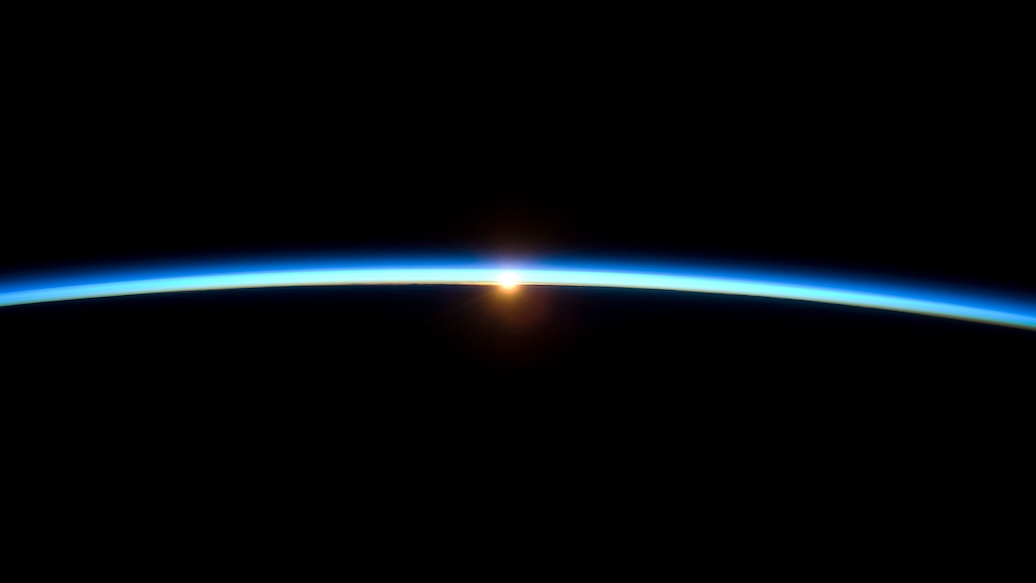
It is widely seen as a major success of environmental protection: The Montreal Protocol was signed just 13 years after scientists first warned that CFC molecules could endanger the ozone layer – and two months before scientists observed the famous “ozone hole” above Antarctica. Its impact has been crucial in protecting the ozone layer, with a 98% reduction in the production of CFCs and other ozone-depleting substances over the following decades.
“The Montreal Protocol is widely seen as the poster child of environmental governance,” says Peter Haas, a professor of political science at the University of Massachusetts Amherst. “It responded fairly quickly to a newly uncovered problem and has in effect solved it.” Because of its success, it became a model to follow in later efforts to solve global environmental issues, adds Adil Najam, founding dean of the Pardee School of Global Studies at Boston University: “For people in my generation, it is the granddaddy of environmental diplomacy. For a while, we saw it as a kind of Rosetta stone that unlocked the secret of effective multilateral agreements.” But its success has rarely been repeated since. With hindsight, most experts see it as a fortunate case, combining favourable circumstances that helped align science, industry and politics.
First, the science was solid, little contested, and had a clear message: CFC molecules degrade ozone in the atmosphere, and less ozone means more harmful UV radiation. Secondly, those two consequences were visible: scientists could visualise the ozone hole over Antarctica, while UV radiation, though invisible, had a very concrete impact: increased risks and the fear of skin cancer. Altogether, the problem appeared straightforward: a single cause leading to two conspicuous effects.
Another key factor was that CFCs were produced by a small number of companies, says Najam. The market leader, DuPont, was responsible for a quarter of worldwide production. So when it flipped its position and accepted a phase-out, the whole industry could follow suit. In addition, the consumer side was rather simple: CFCs were used mainly in a few industries, above all, refrigeration and aerosols.
It’s the economy, stupid
A third point was that CFC substitutes were close at hand. Initially, producers opposed regulation, arguing that switching to them was too hard. They nevertheless rapidly invested in R&D to develop substitutes, namely HCFCs and later HFCs. “The market leaders – which were based in the US and Europe – saw a potential market advantage to gain from regulation,” says Najam. “They were feeling growing competition on the CFC market from emerging industrialising countries such as Mexico, India, China and South Africa. They realised that a regulation limiting CFCs would benefit them more than it would benefit their competitors, as they already had the expertise to rapidly switch to substitutes.” In effect, the Montreal Protocol became a promise to extend their quasi-monopoly for a few more decades, and Dupont was the first to flip and support regulation.
The negotiators got another point right, according to Najam: they listened to the worries of the losing side, namely the countries that were expanding their CFC production capacities. The protocol gave them a longer grace period than Western countries to wean themselves off CFCs, allowing their industries the time to develop production lines for substitute chemicals. Second, it created a financial compensation mechanism: developing countries that had joined the Protocol could request financial aid to cover the costs of transitioning away from CFCs.
The fund was financed by high-income countries, reaching four billion dollars by 2019. “This was the carrot that created an incentive to sign the Protocol,” explains Frank Biermann, professor of global sustainability governance at Utrecht University in the Netherlands. “The stick was trade restrictions for products still containing CFCs. So far, it’s still unclear what was more effective: the carrot or the stick.”
Another factor was the low number of stakeholders – a handful of industries in a few high- and low-income countries – which helped move the discussions forward, notes Matthew Paterson, director of the Sustainable Consumption Institute at the University of Manchester. In addition, “the United Nations Environment Programme fought to keep the lead role in the negotiations and to prevent the involvement of the UN General Assembly. And that helped: it’s easier to get 20 people to agree than 200.”
For Paterson, the geopolitical climate at the time was favourable: “The US and USSR were trying to navigate their way out of the Cold War. Ronald Reagan was approaching the end of his term and wanted to leave some kind of legacy.” Najam concurs: “The world was very different back then. After surviving the threat of nuclear annihilation, we felt we could solve anything if we came together, especially a technical issue like CFCs.”
The legacy of Montreal
The Montreal Protocol’s success strongly influenced environmental diplomacy, according to Najam. “It framed what we call the convention-protocol approach. The idea is to start with discussing and agreeing on a broad set of objectives, such as limiting climate change, protecting biodiversity or setting a framework for international cooperation on ozone depletion, as in the Vienna Convention of 1985” – the parent treaty and framework agreement for the Montreal Protocol. “A convention starts as an empty shell that is later filled with a series of protocols defining in detail how to reach those goals. It could be phasing out harmful gases such as CFCs, applying trade sanctions or creating financial incentives, you name it. The idea is to go progressively.”
Another point was the concept of epistemic communities, developed by Haas. It describes a group of scientists who not only agree on the scientific basis, but also share common norms, values and policy goals, as was the case for the atmospheric scientists who raised the alarm about the ozone layer. “In contrast to government-appointed experts who tend to offer the advice that policymakers want, epistemic communities already have a foot in policy and science and really act as advisers,” says Haas.
Altogether, the success in tackling the ozone issue boosted the confidence and ambitions of people involved in global environmental problems, says Najam. “They thought: we can do it at an even bigger scale.let’s try to tackle biodiversity and climate change.”
Montreal was not unique. Some other efforts did succeed, before and after. Experts mention the CITES Convention of 1973, which curbed the trade of endangered species, and the moratorium on commercial whaling signed in 1982. A series of protocols starting from 1985 managed to reverse the problem of acid rain in Europe, reducing emissions of sulphur, nitrogen oxides and volatile organic compounds step by step. These were rather narrow issues with specific problems and solutions, as was ozone depletion.
The 1976 Barcelona Convention for the Protection of the Mediterranean Sea tackled a much more complex issue involving many countries and industries. “I think it worked pretty well,” says Haas. “The pollution load in the Mediterranean has remained basically constant despite massive, ongoing economic and population growth along its shores.” It followed the convention-protocol approach, with subsequent treaties that tackled dumping at sea, oil spills and industrial discharge into the water, and that created marine sanctuaries.
The big problems are difficult to solve
But these successes could not be replicated for broader environmental challenges, such as the accelerating loss of biodiversity or climate change. They are orders of magnitude more complex and fragmented than the issue of CFCs and ozone. They have multiple causes and multiple impacts across all regions of the world and involve a multitude of stakeholders, from industry to consumers and those who bear the brunt of the problems. The substitutes are unknown, expensive or disruptive for established industries and the existing economic system.
Every human activity around the world – be it personal or commercial – emits some quantity of climate gases, contributes to climate change and is potentially affected by it, points out Paterson. And significantly reducing emissions dramatically impacts our lives: how we travel and heat our homes, what we eat and the kind of work we do. “Nobody worried about having to use a different hairspray because of the CFC ban,” he quips. Replacing fossil fuels with renewables creates competition between players working in completely different markets: centralised for the former, decentralised for the latter. A transition entails upturning a whole market, affecting numerous intermediaries and infrastructures.
When it comes to climate change, the multitude of competing interests has fragmented stakeholders’ positions, notes Biermann: “There is no common binding reduction policy that is supported by everyone. Some countries might also favour or oppose an environmental treaty for a seemingly unrelated reason, as a way to exert political pressure.”
The heterogeneity of industrial stakeholders must also be considered carefully in environmental diplomacy, adds Ans Kolk, a professor at the University of Amsterdam working on corporate social responsibility in international business. “Negotiators must distinguish between companies heavily invested in old technology, those that have the potential to switch, and smaller players thatcould benefit from new markets but who are often not invited to the negotiating table. New rules can – and will – hurt some existing companies. But not taking any decision will also harm other companies whose voice has not been heard – and can stall new innovative solutions.”
Should environmental negotiations follow the Montreal Protocol model by starting with a smaller number of countries? “It’s not that simple,” says Paterson. “That’s what the Copenhagen Accord on the climate tried to do in 2009. It was drafted by only five parties – the US and a coalition of Brazil, China, India and South Africa – only to be rejected by the countries that had not been invited to the discussion and therefore saw the agreement as illegitimate.”
Could PFAS lead to a second Montreal Protocol?
PFAS may represent an intermediate case in complexity. This group of thousands of organofluorine molecules, dubbed “forever chemicals,” accumulates in water bodies, soils, crops and the entire food chain. “We need a lot more scientific information about the issue,” says Kolk. “About where PFAS are produced, used, and leaking, where they accumulate, how they interact with living organisms, which of their properties are important, and how they can be replaced.” However, their applications as coatings and surface treatments are much broader than those of CFCs, ranging from cookware to textiles, food packaging, cosmetics and healthcare, as well as uses in the oil and aviation industries.
This requires examining each specific application separately, says Kolk. “I had hoped that some of the largest companies producing PFAS would be more active in finding substitutes. They could benefit from it because they probably would have the capacity to move quickly into the new market, as happened with CFCs. But PFAS are more complex, and incentives are lacking.”
A key point is to understand the input from industry correctly, she adds. “Negotiators should include people who used to work for the industry and are familiar with its position. But it’s important to distinguish genuine technical information from lobbying or stalling.”
How should environmental diplomacy tackle today’s global challenges? Najam argues against trying to solve everything at the same time. “With climate change, we are making the problem bigger and bigger by including more and more issues. I believe that we should segment the problem into smaller pieces and discuss them little by little. It’s like feeding an infant: you do it in little bites, one spoonful at a time. But I know I’m in the minority with this opinion.”
Haas has a different view: “I think that the bottom line is the political will to change things. Without it, feel-good statements don’t really make any difference. You cannot know in advance how subproblems will interact with each other, so it’s important to have a legal framework that can adapt.”
The experts have diverging views on the current role of the Intergovernmental Panel on Climate Change (IPCC). “It has established the great idea that scientists should provide information to policymakers but not tell them what to do,” says Najam. For Paterson, the IPCC “should be redesigned to focus on more specific questions coming from policymakers about which policies actually work, instead of providing a comprehensive survey of everything.”
Haas is the fiercest critic: “It was felt in the US that Montreal went too fast. This led the IPCC to be slow and cumbersome by design, with politicians and diplomats writing its summaries for policymakers.” But for Biermann, “a world without the IPCC and COPs would be worse. It is irresponsible to say that it does not work. One should not throw out the baby with the bathwater.”
All experts agree on one thing: the Montreal Protocol turned out to be a real success of environmental diplomacy. But trying to apply the same approach to complex problems such as climate change is simplistic – if not naïve.
By
Daniel Saraga, science journalist
Featuring
Frank Biermann, professor of global sustainability governance at Utrecht University (The Netherlands)
Peter Haas, professor of political science at the University of Massachusetts Amherst (USA)
Ans Kolk, Professor at the Amsterdam Business School, University of Amsterdam (Netherlands)
Adil Najam, dean of the Pardee School of Global Studies at Boston University (USA)
Matthew Paterson, director of the Sustainable Consumption Institute at the University of Manchester (UK)