Essay by Jorin Lowrance
Which scientific developments or breakthroughs are most relevant for society or the planet? What do they mean for the future?
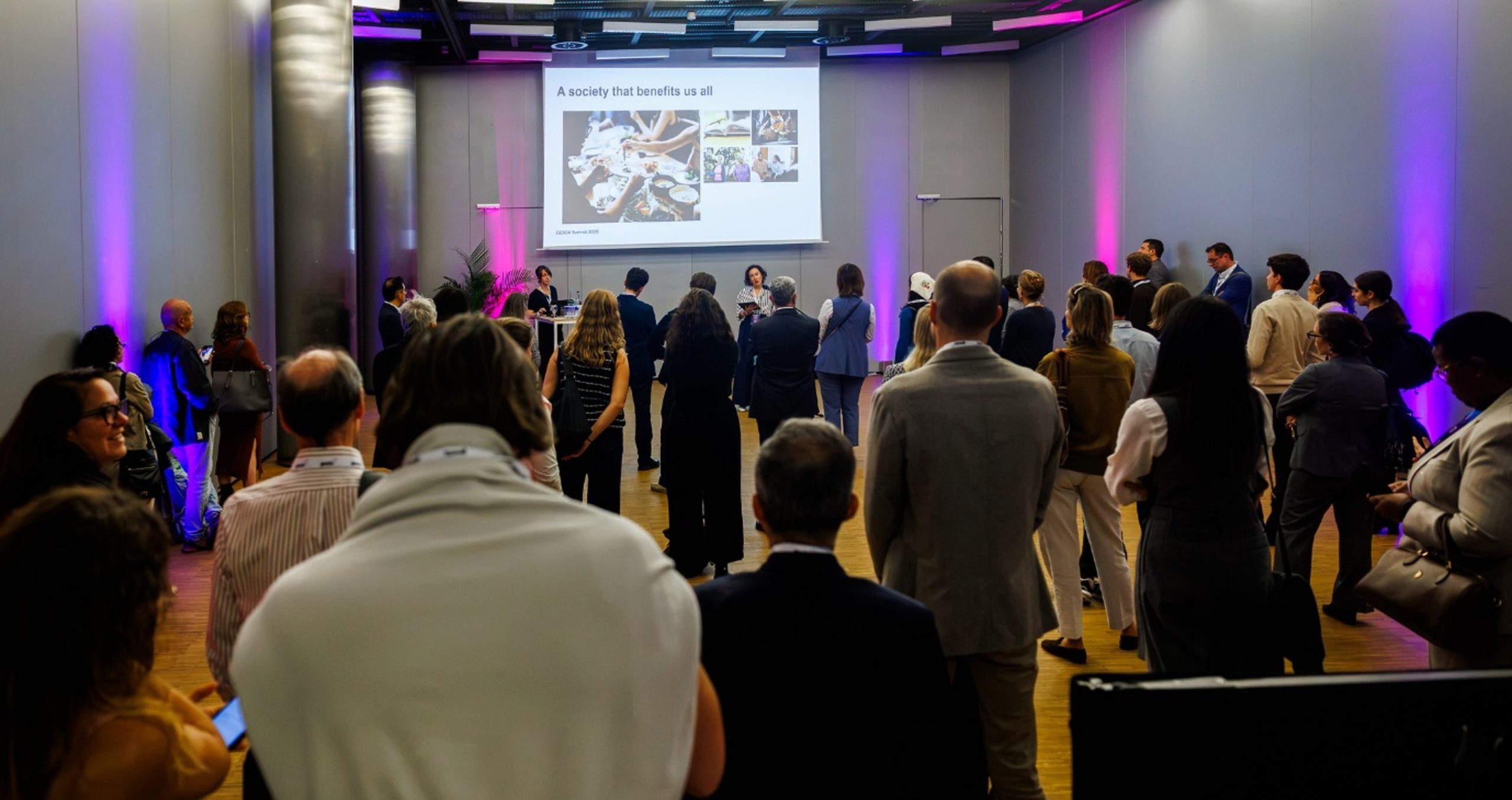
GESDA’s 2025 Anticipatory Summit was, in one word, eye-opening. If everyone was given the opportunity to listen to these enlightening discussions, no one would have to be worried about our love for science.
The technology I found to stand out the most was, unsurprisingly, artificial intelligence (AI). This decades in the making innovation has truly broken through recently, leading to several extraordinary advances. One is in medicine, where Google’s Deep Mind produced AlphaFold, an AI that is unlocking new protein structures, has helped breed disease-resistant bees in Norway, and identify two existing FDA-approved medicines for diseases like Chagas, which has killed over 6 million people in Latin America.
In the realm of materials science, AI has advanced materials discovery by providing 500 new lithium-ion combinations. In terms of modelling, AI is aiding our advancement in spectral imaging, climate, and disease prediction in plants. AI tools developed a novel method for irrigation, leading to a 40% reduction in water loss. What is important to note is how all of these are not just future promises of potential, but real world stories and achievements. These examples highlight the likely impact AI will have on the human race and civilization.
At the same time, despite its benefits and utility in maths, sciences, weather and more, there were certain hazards that were flagged. AI capabilities are outpacing our often stagnant diplomatic processes and legal regulations, emphasizing the need for new international rules, transparency, and uncertainty reporting. The utopian ideals and opportunity need to be balanced against near and longer term risks.
For example, the increasing compute capacity driving AI is a double-edged sword due to the huge environmental and implications. AI’s energy and water use is already causing problems for local communities, with some estimates forecasting a doubling of demand by 2030. In industry and society, routine middle to low income jobs may decline, risking intensification of already significant wealth polarisation and inequality. Will social policies around universal basic income keep pace with technological change? Finally, it’s important to take account of AI’s potential existential threat to humanity once it reaches ‘superintelligence’. This is a legitimate concern on the basis of expert testimony by the “godfather” of AI and Nobel Prize winner Geoffrey Hinton, amongst other leading AI experts. This raises the most essential question: will we be able to live in harmony with AI as an equal, and thus benefit from the utopian potential – or will AI be humanity’s downfall?
So, how should we prepare for what is coming?
Drastic acceleration of technological progress, along with developing climate pressures, geopolitical shifts and inequality, have led to a time of chaos. Political and societal actors’ continuation to exploit doom and gloom narratives, have led to increased public hopelessness. So, how can we shape a viable future we embrace, rather than fear?
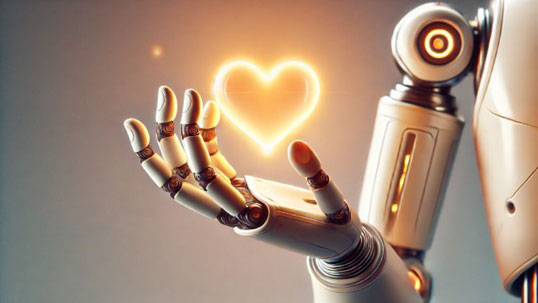
One answer: love.
Given that I was at a science and diplomacy anticipatory summit, I never expected love to be involved. Nevertheless, in a discussion titled ‘Rethinking our human condition in a technology-driven world’, one panelist asked, “when did we fall out of love with the future?”. Essentially, what they were saying was that we have to realize we are, fundamentally, in a scientific revolution.
To do this, multiple speakers reinforced that we need a change of perspective in education and leadership training. Through that, we can cultivate imagination in the generations to whom the baton will inevitably be passed. We must learn to fall in love with the future.
Another change that seemed commonly agreed upon, was regarding diplomacy. Conventional institutions (UN, science agencies) are often static and outdated, unable to match technology’s pace of evolution. For that reason, there was a widespread call for restructuring diplomatic and conventional institutions, such as invoking article 109 of the UN Charter. Furthermore, the need to for planetary governance frameworks on borderless technologies like AI, as well as the need for trust and universally agreed evidence as a foundation for diplomacy to thrive was commonly touched upon.
In summary, what stood out to me – a 16-year-old surrounded by big words, big names and even bigger technologies – was a dire need for a combination of trust and transparency in science and communication, flexibility, and love for each other and our shared future. In the end, we’re all stuck on the same floating piece of rock, rotating around the same shining star.
Biography from Jorin Lowrance
As a 16 year old student attending the Internation School of Geneva (Ecolint) Jorin has a distinguished track record of engagement in global sustainability dialogue served as a rapporteur at the 2024 and 2025 Villars Summits, and at the 2025 GESDA Summit at CERN. His insights have been widely shared through four articles in the Villars Review. Deeply committed to climate action and systems thinking, Jorin also serves as a Youth Representative in Systems Thinking and Sustainability Design Teams at Ecolint and interned with the founder of the regenerative agriculture startup Bison Underground. Furthermore, he is the lead organizer of the FutureTechExpo—a ‘Tech for Good’ themed event that hosted over 200 participants—and the founder and creator of the Bite Me Podcast, which has explored the policies, innovations, and leaders shaping the climate and sustainability landscape across five episodes since June 2025.