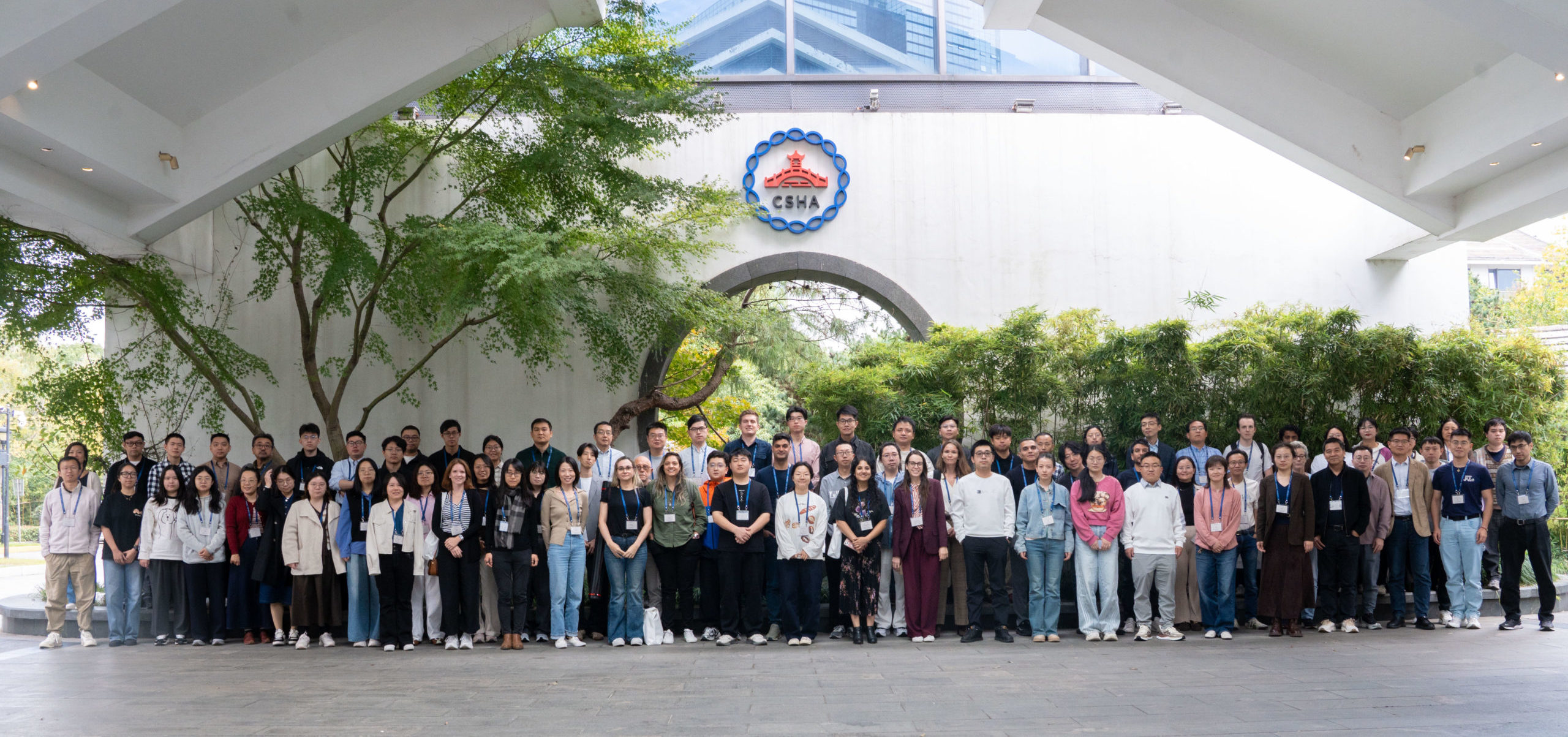
On 4 November, GESDA shared insights on how anticipating breakthroughs in synthetic biology can support multilateral governance efforts at the Cold Spring Harbor Asia Conference in Suzhou, China.
With synthetic biology applications set to transform medicine and health, agriculture, manufacturing, materials science and environmental restoration in coming years, GESDA’s Dr Sophie Gilbert explained how science anticipation can assist in developing effective governance frameworks.
“Because synthetic biology encompasses a wide range of applications with very different characteristics and safeguards, it creates unique governance challenges,” said Dr Gilbert. “Anticipating where science may lead creates the space needed to reflect collectively on which applications should be encouraged, what conditions would enable them to deliver societal value, and what safeguards, monitoring and mechanisms for changing course may be needed. In this way, multilateral governance can evolve alongside synthetic biology, preserving the ability of societies to decide how these technologies should shape our lives, our societies, and our relationship with the planet.”
GESDA thanks the conference organisers Prof Junbiao Dai (Agricultural Genomics Institute at Shenzhen, CAAS), Prof John Glass (J. Craig Venter Institute) and Prof Anne Osbourn (John Innes Centre) for the opportunity to participate in these important discussions.
Key Takeaways from GESDA’s Sense-Maker on Synthetic Biology
- Unlike other programmable matter, changes to living material leave traces through its lineage; reversibility isn’t guaranteed. Therefore remediability and navigability must be used for steering and control – but for how long and over what timescale?
- Some engineered organisms are designed to be released from the lab or are made evolutionarily open-ended for their intended function: containment is no longer applicable, and evolutionary dynamics become an ecological firewall. But what happens when the ecosystem itself is being re-designed?
- Synthetic biology as a field stands at a turning point, with the community becoming more distributed and AI accelerating design beyond predictability. When control cannot be reached, relationships between actors will be essential for both the progress of the field and as a source of mutual decision-making.